Advice and information on our working methodsl
Tips for caring for your clothing
More durable garments that don’t rest as closely to sweat glands will hold up to a few wears without needing cleaning. Your jackets, jeans, and some other types of pants only need to be cleaned when they’re soiled or develop an odor.
When you buy a garment, read the care label. Know which of your clothes require hand-washing, gentle cycles, or are dry clean only.
In other words, trust the label.
Some clothing should be folded and others hung, but most textile manufacturers leave that piece of information off of the clothing label.
As a general rule
Hang: Blouses, trousers, dress pants, dresses, jumpsuits, jackets, overcoats, blazers, suits, and dress skirts and pressed shirts.
Fold: Sweaters, casual shirts, and heavy pants. If you don’t have drawer space, fold sweaters over a hanger to avoid misshaping the shoulders.
Frequently Asked Questions
Dry cleaning is any cleaning process for clothing and textiles using an organic solvent other than water. Special solvents and soaps are used so as not to harm fabrics and dyes that will not withstand the effects of ordinary soap and water.
This process is gentler than regular washing because it reduces the possibility of shrinkage and/or color loss. The solvents work better than water, removing stains without ruining fabric.
Dry cleaning uses fluids to remove soils and stains from fabrics.
Among the advantages of dry cleaning is its ability to dissolve grease and oils in a way different from water. Natural fibers such as wools and silks dry clean beautifully, but can shrink, distort, and lose color when washed in water.
Synthetic fibers like polyester also respond well to dry cleaning.
However, with washing, they can retain oily stains. Dry cleaning helps to return garments to a “like-new” condition using precautions to prevent shrinkage, loss of color, and change of texture or finish.
Dry cleaning is any cleaning process for clothing and textiles using an organic solvent other than water. Special solvents and soaps are used so as not to harm fabrics and dyes that will not withstand the effects of ordinary soap and water.
This process is gentler than regular washing because it reduces the possibility of shrinkage and/or color loss. The solvents work better than water, removing stains without ruining fabric.
Some buttons are made out of materials that can’t withstand normal dry-cleaning or washing procedures.
Our policy is to identify and remove these types of buttons before cleaning.
Over time, laundered shirt buttons may crack due to the heat & pressure used to properly press the shirt. When this happens, we replace them.
To break down the stain may also break down the fabric or dye, thereby ruining the garment. When we discover this type of stain, our policy is to stop attempting to remove it before any damage to the garment occurs.
Take caution when using home remedies. It is usually easier for us to remove an untreated stain.
We recommend that you bring it in the cleaners as soon as possible. Any stain becomes more difficult to remove the longer it remains on the garment.
Heat can set stains, so it’s best not to leave them in a hot car all day before taking them to the cleaners.
Be sure to point out all stains to your dry cleaner.
The care label is only required by law to provide one proper way to clean the garment.
Most garments are dry cleanable, which is the preferred method and is a gentler process. However, depending on how the garment is constructed, dyed and finished, it may need to be wet cleaned or washed.
When in doubt, we test for the safest way to clean your garment.
The bags are provided to protect the garments from dirt and dust until you get them home. It is best to remove the plastic bag and then place your garments in a climate controlled vented closet.
No. Special procedures and additives are used on leathers to help retain their color and texture.
Removal is usually easier if the garment is brought in promptly with no home remedies applied. Home remedies such as hair spray, only makes the stain worse by creating a glue stain.
Ink stains come in a variety of colors and complexions and might be water or oil based. Professional spotting techniques are the most effective way to remove ink stains.
Regular cleaning will help keep dust, smoke and contaminates out of your drapes, providing for a longer life expectancy.
Prolonged sun exposure and moisture that forms on windows and comes in contact with the drapes can cause problems. The sun can cause the fabric to rot, which will result in shredding when the drape is pulled or cleaned.
Water from the window can cause stains and dark rings when the water dries. If cleaned immediately, these stains usually will come out. Otherwise, this type of damage may be irreversible depending on the type and color of the material.
Cleaning Process

Drop Off
Your clothes are quickly inspected at intake and any special instructions are noted on your ticket.

Check In
Once your order is in the system, each item goes through a detailed inspection looking for stains, damage, and for missing and / or broken buttons.

Sorting Before Cleaning
Once your order is inspected, it is sorted into “lights and
darks” and it is indicated if items get starch or no starch.

Before ironing
After your items have been cleaned, they is inspected again prior to ironing.

Ironing
While being ironed, each item is once again inspected.

Final Inspection & Packing
Once placed on hangers, your clothes undergo a final inspection and we ensure that the order is complete.
TTreatment of Stains
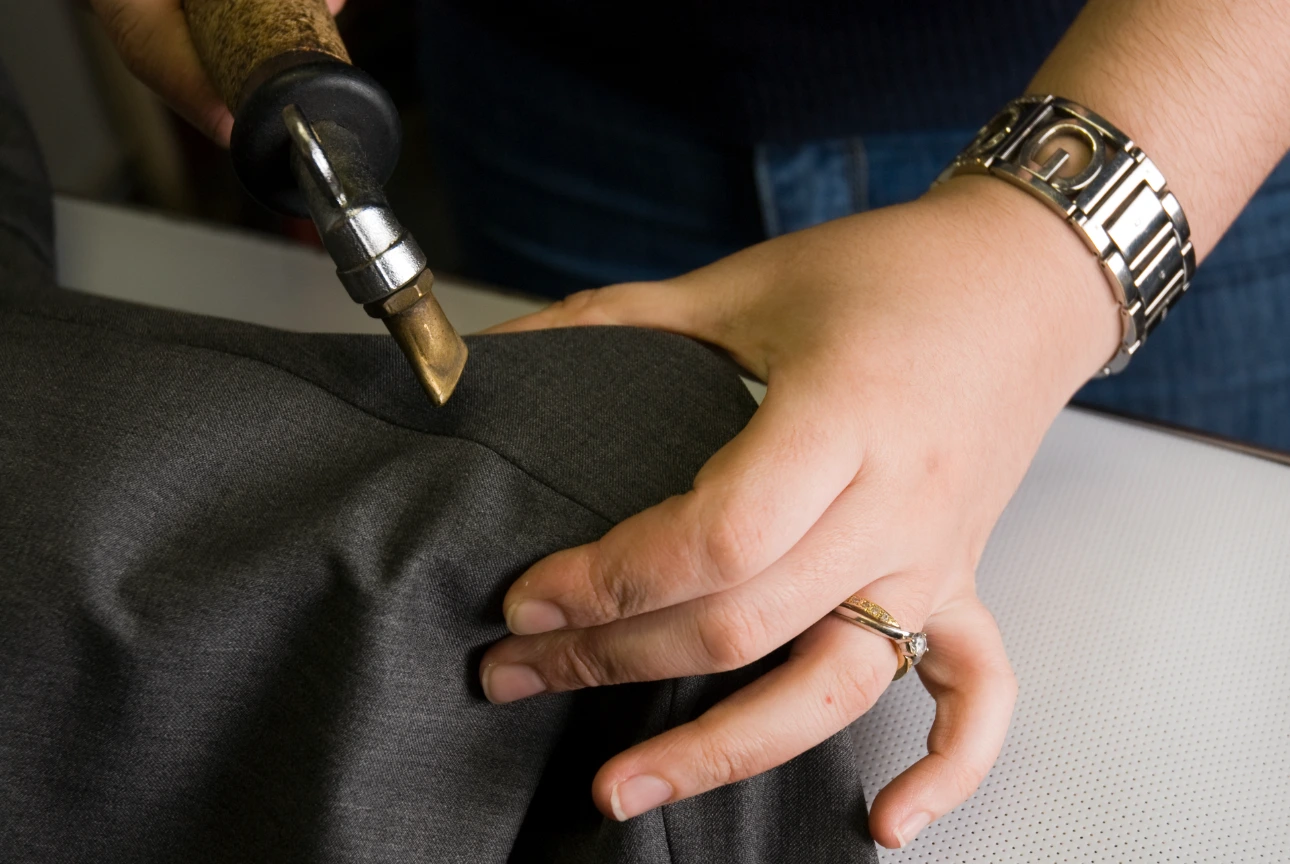
When it comes to stains, professional dry cleaners know what they are doing. It is one of the most common problems they encounter and solve. Even the most catastrophic stains can be removed with relative ease thanks to their special solvents, equipment, and training. To effectively remove a stain, a number of factors must be taken into account: the nature of the stain, the type of fabric, and the colourfastness of the dye.